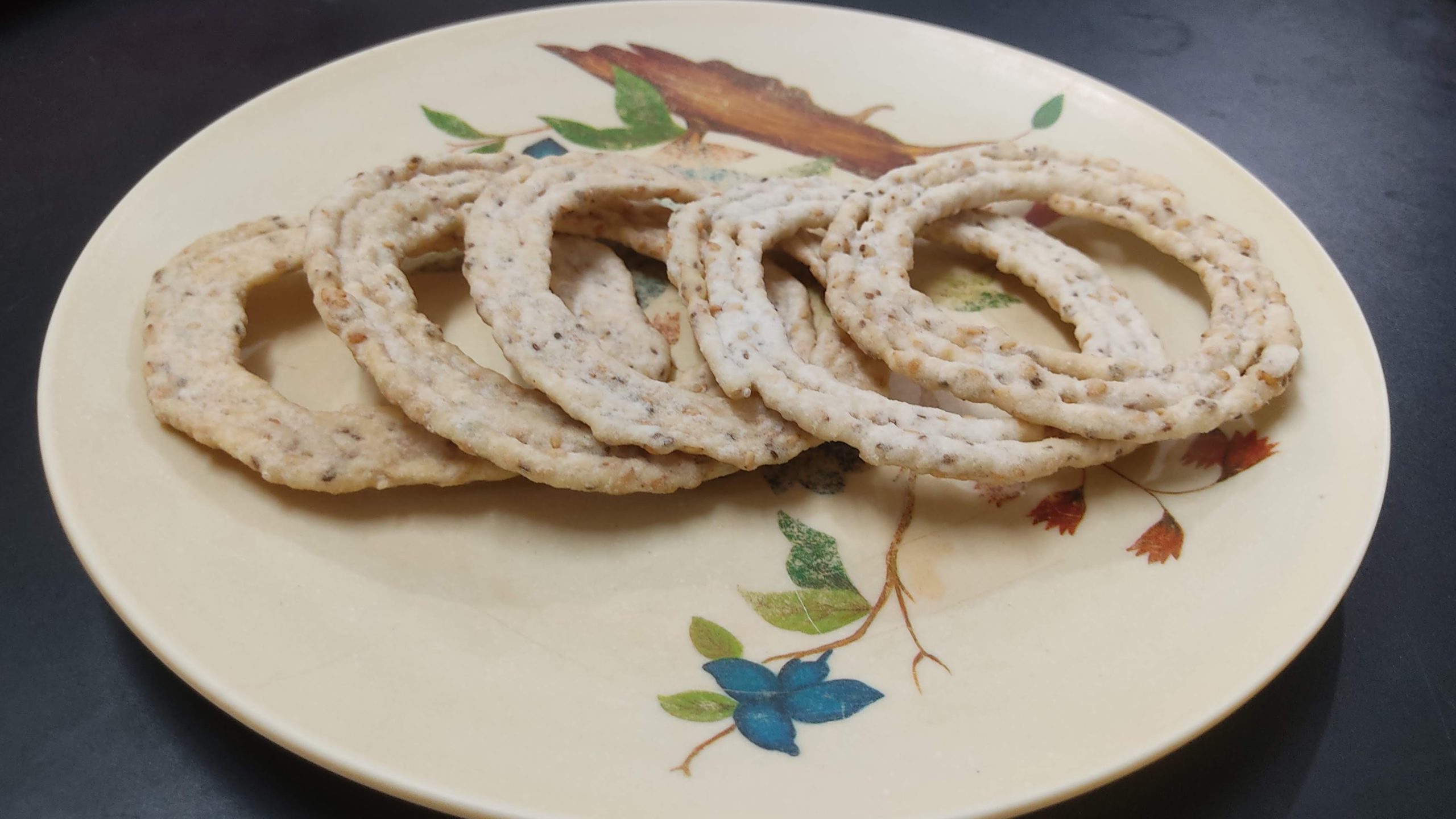
Sakinalu is one of the most iconic traditional snacks of Telangana, deeply connected with festivals, harvest celebrations, and family traditions. More than just food, Sakinalu represents patience, craftsmanship, prosperity, and togetherness. It is especially prepared during the Makar Sankranti festival, when families gather to prepare and share festive foods made from freshly harvested rice.
Known for its crunchy texture and beautiful spiral shape, Sakinalu is handmade with care and skill, making it a cherished festive specialty passed down through generations.
Origin and Cultural Significance
The word Sakinalu is believed to come from the Telugu word “Chakinamu,” derived from “Chakram,” meaning wheel or circle, referring to its spiral shape.
Traditionally, farming communities prepared Sakinalu after harvest using freshly milled rice flour. It symbolized gratitude for a successful harvest and abundance in the household.
Preparation often became a community activity, where women gathered, shaped spirals together, and celebrated the festive season.
Ritual of Gowramma
In many Telangana households, Sakinalu preparation begins with a sacred ritual.
- Small idols of Gowramma (Goddess Gauri) and Pilla Gowramma (Lord Ganesha) are made from dough.
- Idols are decorated with turmeric and kumkum.
- First Sakinalu spirals are shaped as offerings for family prosperity.
- These sacred spirals are not fried and later placed under a Tulsi plant or tree.
This ritual connects cooking with devotion and blessings.
Sakinalu in Weddings – The Saare Tradition
Sakinalu plays an important role in Telangana wedding customs.
- Bride’s parents prepare large quantities of Sakinalu.
- These are sent with the bride to her new home.
- Groom’s family distributes them among relatives and neighbors.
- Preparing hundreds or even thousands of Sakinalu is considered a matter of pride.
This custom symbolizes sharing happiness and welcoming new family bonds.
What Makes Sakinalu Special?
- Made mainly with rice flour, unlike many snacks made from gram flour.
- Naturally gluten-free.
- Hand-shaped spirals, not machine-made.
- Light, crunchy, and long-lasting snack.
- Prepared using simple ingredients but requires skill.
The ability to shape perfect spirals without breaking them is a skill learned over time.
How to Make Sakinalu
Ingredients
- Rice flour – 2 cups
- Sesame seeds – 2 tbsp
- Ajwain (carom seeds) – 1 tsp (slightly crushed)
- Salt – to taste
- Oil – 1 tbsp (for dough)
- Water – as needed
- Oil – for deep frying
Preparation Method
Step 1: Prepare the Flour Mixture
Take rice flour – 2 cups (freshly ground preferred) in a wide mixing bowl. Using a wide bowl helps in mixing evenly and kneading comfortably.
Add:
- Sesame seeds – 2 tbsp (white sesame preferred)
- Ajwain (carom seeds) – ½ tsp (lightly crushed)
- Salt – as per taste
- Oil – 1 tbsp (hot oil for better crispiness)
Mix all the dry ingredients thoroughly so that sesame seeds and ajwain are evenly distributed in the flour. Adding hot oil at this stage helps create a crisp texture after frying.
Step 2: Knead the Dough
Now add water little by little. Do not pour all at once. Slowly combine and knead into a soft but firm dough.
- The dough should not be sticky.
- It should not crack when pressed.
- It should hold shape easily while shaping spirals.
If the dough is too dry, Sakinalu may break while shaping. If too soft, they may absorb excess oil while frying. So balance is very important.
Cover the dough with a damp cloth and let it rest for 10–15 minutes. This helps the flour absorb moisture evenly.
Step 3: Prepare the Shaping Surface
Spread a slightly wet clean cotton cloth on a flat surface. The cloth should be moist but not dripping wet.
Why wet cloth?
It prevents the dough from sticking and helps in easily lifting the shaped Sakinalu before frying.
Step 4: Shape the Sakinalu
Take a small portion of dough and roll it lightly between your palms.
Using your fingers, press and rotate the dough to form a spiral (coil) shape directly on the wet cloth. Traditionally, Sakinalu are shaped by hand in circular patterns.
- Keep the thickness even.
- Do not make it too thick (will remain soft inside).
- Do not make it too thin (may break).
Prepare 3–4 Sakinalu at a time and arrange them neatly on the cloth.
Step 5: Heat the Oil
Heat oil in a deep frying pan on medium flame.
To check oil temperature:
Drop a tiny piece of dough into oil. If it rises slowly to the top without browning immediately, the oil is ready.
If oil is too hot → Sakinalu turn brown quickly but remain soft inside.
If oil is too cold → They absorb excess oil.
Step 6: Fry the Sakinalu
Carefully lift each Sakinalu from the cloth. Support gently with your fingers and slowly slide it into the hot oil.
Do not overcrowd the pan. Fry one or two at a time depending on pan size.
Fry on low to medium flame, turning occasionally for even cooking.
Fry until:
- Golden in color
- Crispy texture
- Oil bubbling reduces
This usually takes 4–6 minutes per batch.
Step 7: Drain and Cool
Remove the fried Sakinalu using a slotted spoon.
Place them on tissue paper to drain excess oil.
Allow them to cool completely before storing. They become crispier as they cool.
Step 8: Storage
Once fully cooled, store in an airtight container. Properly stored Sakinalu stay fresh and crispy for 2–3 weeks at room temperature.
Tips
- Rice flour should retain slight moisture to prevent cracks.
- Slightly wet cloth prevents sticking.
- Dough consistency is important—not too soft or hard.
- Fry on medium heat for even cooking.
- Do not overcrowd the pan.
- Practice improves spiral shaping skill.
Flavor Variations
Tella Sakinalu
Classic plain version with mild seasoning.
Karam Sakinalu
Spicy version with red chilli powder and garlic.
Pachi Mirchi Sakinalu
Made using fresh green chilli and garlic paste.
Nethi Sakinalu
Prepared with ghee for softer texture, suitable for children and elders.
Sakinala Podi
Broken sakinalu crushed with onions and chillies to create a savory crumble.
Health Benefits
- Sesame seeds provide calcium and healthy fats
- Ajwain helps improve digestion
- Homemade snacks are free from preservatives
Storage and Shelf Life
- Sakinalu stay fresh for 2–3 weeks in airtight containers.
- Cool completely before storing.
- Keep away from moisture to retain crispiness.
Symbolism of the Spiral Shape
The circular design symbolizes:
- Prosperity
- Continuity of life
- Unity of family
- Seasonal cycles and harvest abundance
Some families even maintain specific ring counts for ceremonial purposes.
Sakinalu in Modern Times
Today, ready-made Sakinalu are widely available, but homemade preparation remains emotionally significant. Families continue this tradition to preserve heritage and teach younger generations traditional cooking skills.
Frequently Asked Questions
Why is my Sakinalu breaking while frying?
Sakinalu may break due to:
- Dough too dry
- Not enough water while kneading
- Oil too hot
- Rice flour too coarse
Make sure the dough is soft and smooth.
Why are my Sakinalu hard?
Hard Sakinalu can happen if:
- Dough is too tight
- Rice flour is too dry
- Over-frying
Knead soft dough and fry on medium flame.
Can I use store-bought rice flour?
Yes, but traditionally fresh homemade rice flour gives better taste and crispiness. If using packed flour, sieve it well before kneading.
How long can Sakinalu be stored?
Sakinalu can be stored in an airtight container for 2–3 weeks at room temperature.
What oil is best for frying Sakinalu?
Groundnut oil or sunflower oil works best. Traditionally, groundnut oil is preferred for authentic taste.
Why do Sakinalu absorb more oil?
This happens if:
- Oil temperature is low
- Dough is too soft
- Rice flour quality is poor
Always fry in medium-hot oil.
Can Sakinalu be made without sesame seeds?
Yes, but sesame seeds add traditional flavor and slight nutty taste. Without sesame, the flavor will be slightly different.
What is the perfect dough consistency for Sakinalu?
The dough should be soft, smooth, and slightly tight — not sticky and not crumbly.